What's in the bag
The kit changes slightly by trip, but this is the core setup for both bodies of work — one built to survive pressure and salt, the other built to survive a long approach on foot.
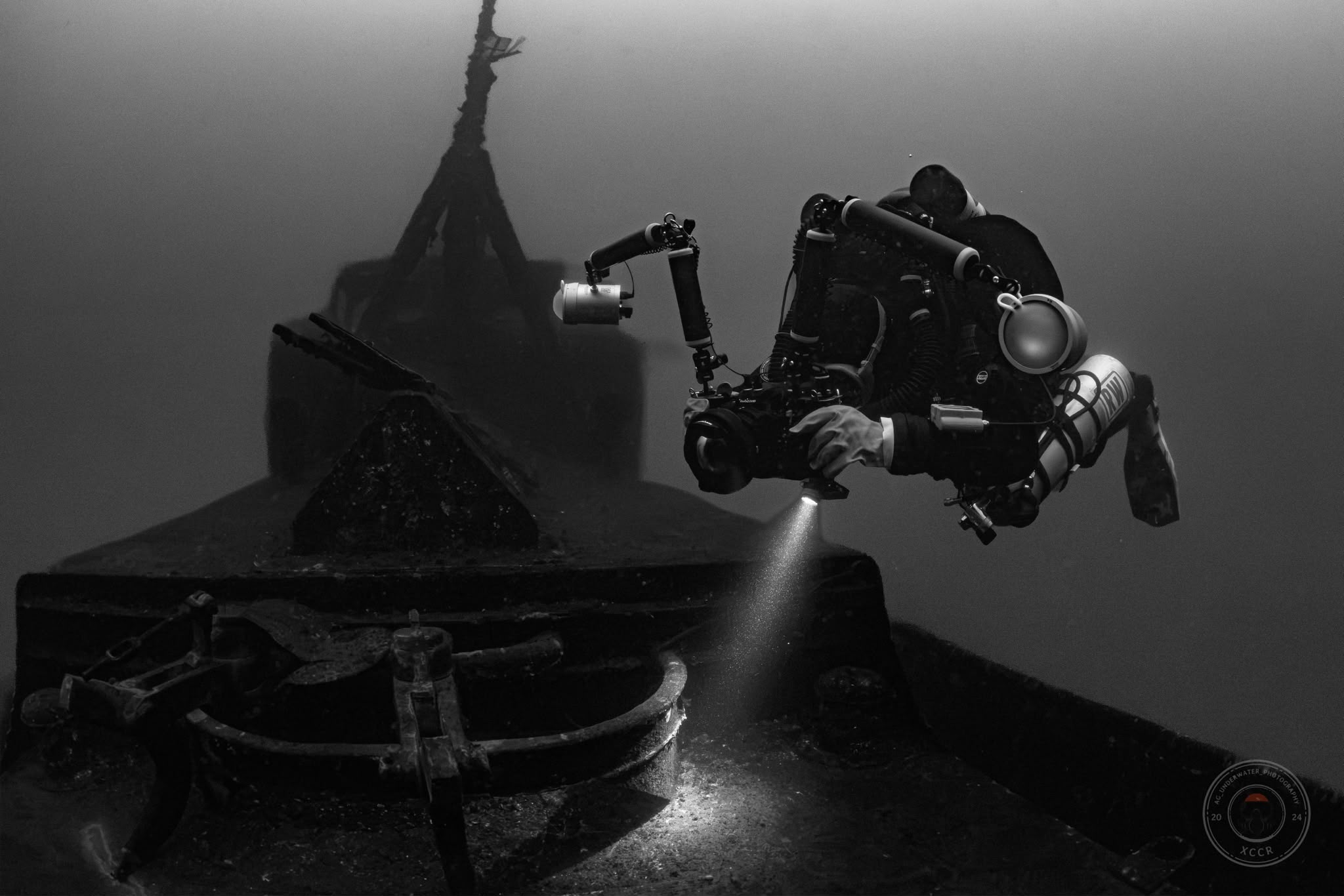
Underwater
Housing, strobes, and glassCanon EOS R5
Full-frame mirrorless — the main camera for wrecks, reef and open-water work.
Camera
Nauticam underwater housing
Built for the R5 and for deep, demanding dives.
Housing
Canon 24–50mm lens
The everyday underwater lens, behind the wide lens below.
Lens
Wet Wide Lens – Compact (WWL-C)
Wet wide-angle lens for big wrecks and close-focus wide scenes.
Lens
Retra Flash Pro Max strobes, arm-mounted
Fill light past the first few meters, where color drops out fast.
Lighting
IQsub XCCR rebreather
Closed-circuit, so long, quiet dives with no bubbles to scare the subject.
Rebreather
On land
Body, glass, and the pack that carries itCanon EOS R5
The same camera, out of the housing and onto the tripod.
Camera
16–35mm wide zoom
Most-used lens for ridgelines and wide basin light.
Lens
70–200mm telephoto
For compressing distant ridgelines and isolating tree lines.
Lens
Carbon-fiber tripod
Light enough for long approaches, stable enough for pre-dawn light.
Support
Graduated ND filters
Balances a bright sky against a dark ridge at first light.
Filters
35L hiking pack, camera insert
Carries the kit plus overnight gear for multi-day approaches.
Pack